
Colonialism is often discussed as a historical period that officially ended with the independence movements of the twentieth century. Yet while colonial empires have largely disappeared, many of the ideas they produced continue to shape how people think about history, culture, race, development, and identity. These inherited assumptions are often so deeply embedded in everyday life that they go unnoticed. They appear in the words we use, the stories we consume, the maps we study, the films we watch, and the history taught in schools.
This phenomenon is commonly described as the decolonization of the mind—a process of recognizing and challenging the cultural narratives that portray some societies as inherently more advanced, civilized, or important than others. Decolonizing thinking does not mean rejecting history or blaming modern generations for the actions of the past. Rather, it involves critically examining the ways colonial perspectives continue to influence public discourse, educational systems, media representation, and cultural values.
In 2026, this conversation has become increasingly relevant as societies strive to create more inclusive historical narratives that acknowledge multiple perspectives instead of a single dominant viewpoint. Understanding these hidden patterns allows individuals to question stereotypes, appreciate cultural diversity, and engage more thoughtfully with the world around them.
What Does “Decolonizing the Mind” Mean?
The concept of decolonizing the mind refers to examining inherited beliefs that were shaped by colonial systems of power.
Colonial governments did not rely solely on military conquest or economic control. They also influenced how people understood identity, knowledge, language, religion, and civilization. Educational institutions, literature, and political systems often promoted the idea that European culture represented universal progress while portraying colonized societies as backward or in need of guidance.
Although political independence has transformed many nations, some of these assumptions continue to influence public attitudes today.
Decolonizing thinking means asking questions such as:
- Whose perspective is being presented?
- Which voices are missing?
- How are different cultures represented?
- Who benefits from a particular historical narrative?
- What assumptions are treated as universal?
These questions encourage critical thinking rather than accepting familiar narratives without reflection.
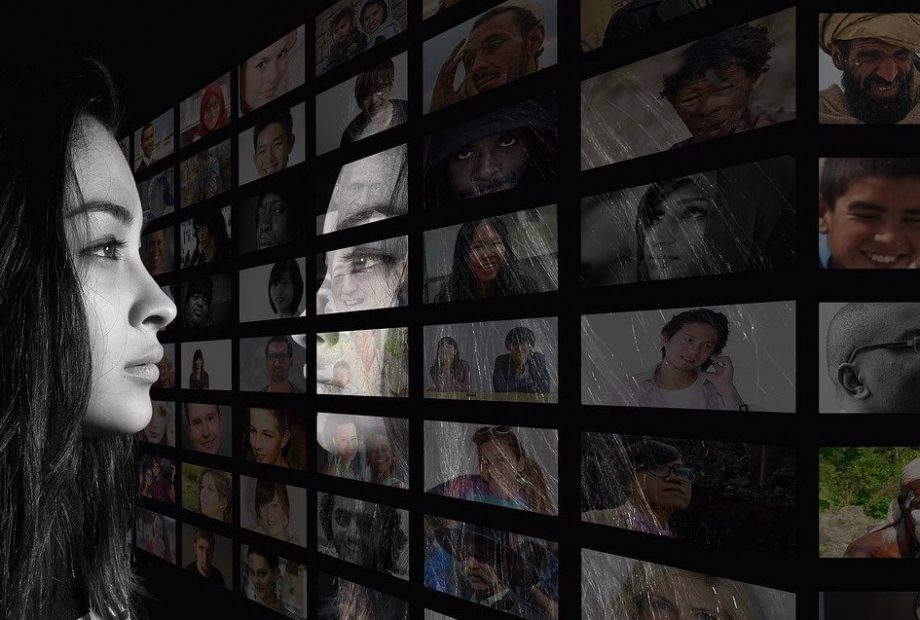
Language Shapes the Way We Think
Language is one of the most powerful carriers of cultural assumptions.
Words influence how people interpret reality, often without conscious awareness.
Certain expressions inherited from colonial periods continue to frame societies in unequal ways.
Examples include describing countries as:
- Primitive
- Civilized
- Discovered
- Developed
- Exotic
- Third World
- Tribal
- Backward
Many of these terms originated within historical contexts where European powers positioned themselves as the standard against which other societies were measured.
For example, describing explorers as having “discovered” lands already inhabited by Indigenous peoples reflects one historical perspective while overlooking the existence and agency of local communities.
Today, more neutral language often provides greater historical accuracy by acknowledging that many regions were explored, documented, or colonized rather than “discovered.”
Maps Tell Stories Too
Even maps can reflect historical perspectives.
One of the most familiar world maps, the Mercator projection, became widely used during the era of European maritime expansion because it was useful for navigation.
However, it significantly enlarges land areas farther from the equator while reducing the apparent size of equatorial regions.
As a result:
- Europe appears proportionally larger than it actually is.
- Africa appears much smaller than its true geographic size.
- Greenland seems comparable to Africa despite being dramatically smaller.
Alternative projections reveal a different understanding of global geography.
Although no flat map perfectly represents Earth’s surface, recognizing that maps involve choices rather than objective neutrality helps develop greater geographical awareness.
History Textbooks and Selective Memory
History education often reflects national priorities.
Many traditional textbooks emphasize political leaders, military victories, and imperial achievements while devoting less attention to the experiences of colonized peoples.
Students may learn extensively about:
- European exploration
- Industrialization
- Scientific revolutions
- Colonial expansion
Yet they sometimes receive comparatively limited information about:
- Indigenous resistance
- Cultural destruction
- Forced labor systems
- Local political institutions
- Contributions of non-European civilizations
- Anti-colonial movements
Modern historical scholarship increasingly seeks to integrate multiple perspectives into educational materials.
Rather than replacing one narrative with another, this approach aims to present a more complete understanding of historical events.
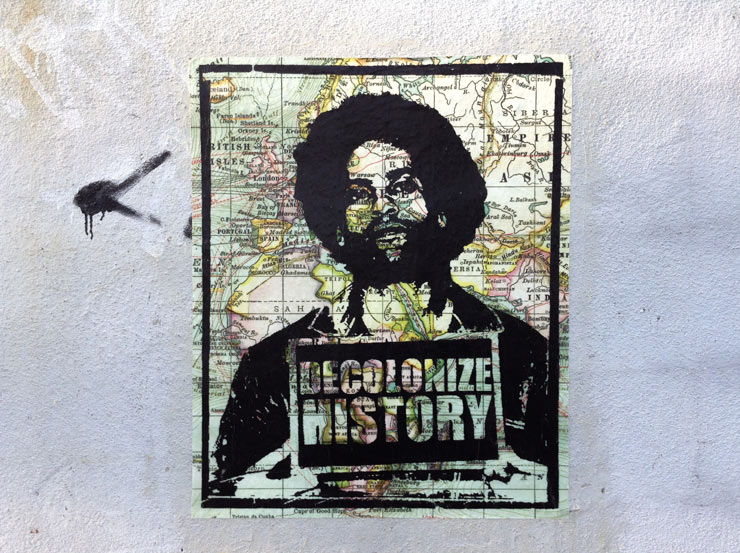
Popular Culture and Familiar Stereotypes
Films, television, novels, and video games have long influenced public perceptions of different cultures.
For decades, many stories portrayed Western protagonists as heroes who entered unfamiliar societies to solve local problems.
Common narrative patterns included:
- The heroic explorer
- The mysterious jungle
- The dangerous native tribe
- The helpless local population
- The foreign savior
These fictional tropes reinforced simplistic images of entire regions.
In recent years, filmmakers, writers, and producers have increasingly collaborated with local communities and cultural experts to create more authentic representations.
While stereotypes have not disappeared, audiences now have access to a much broader range of voices and perspectives.
News Coverage and Global Attention
Media coverage also shapes public understanding of different countries.
Some regions receive attention primarily during crises involving:
- War
- Poverty
- Disease
- Natural disasters
- Political instability
Positive developments such as scientific innovation, entrepreneurship, education, literature, and technological progress often receive far less international coverage.
This imbalance can unintentionally create distorted perceptions.
For example, entire continents may become associated with conflict despite containing enormous cultural, economic, and political diversity.
More balanced journalism highlights both challenges and achievements, allowing audiences to develop more nuanced perspectives.
Museums and Cultural Representation
Museums have undergone significant changes in recent decades.
Traditional exhibitions often presented Indigenous cultures as relics of the past while emphasizing European history as the story of continuous progress.
Modern museums increasingly collaborate with descendant communities to reinterpret collections through multiple perspectives.
Exhibitions now more frequently discuss:
- Colonial acquisition histories
- Indigenous knowledge systems
- Community voices
- Cultural resilience
- Shared authority in interpretation
These changes encourage visitors to view artifacts not merely as historical objects but as elements of living cultures that continue to evolve.
Education Beyond Memorizing Facts
Decolonizing education is not about removing historical figures or rewriting facts.
Instead, it emphasizes developing critical thinking skills.
Students benefit from asking questions such as:
- Which sources were used?
- Who wrote this account?
- What viewpoints are absent?
- How have interpretations changed over time?
Learning history through multiple perspectives encourages intellectual curiosity and reduces the likelihood of accepting simplistic explanations for complex events.
This approach prepares students to evaluate information more thoughtfully throughout their lives.
Social Media: A New Opportunity and a New Challenge
Digital platforms have transformed access to historical information.
Social media enables Indigenous scholars, historians, educators, and cultural organizations to share perspectives previously excluded from mainstream media.
People can now encounter firsthand accounts, oral histories, museum projects, and educational content from communities around the world.
However, digital platforms also spread misinformation rapidly.
Simplified narratives, misleading historical claims, and emotionally charged content can circulate widely without sufficient evidence.
Consequently, digital literacy has become an essential component of decolonizing thinking.
Readers should evaluate:
- Source credibility
- Historical evidence
- Academic consensus
- Context
- Multiple viewpoints
Critical media literacy helps distinguish thoughtful scholarship from oversimplified narratives.
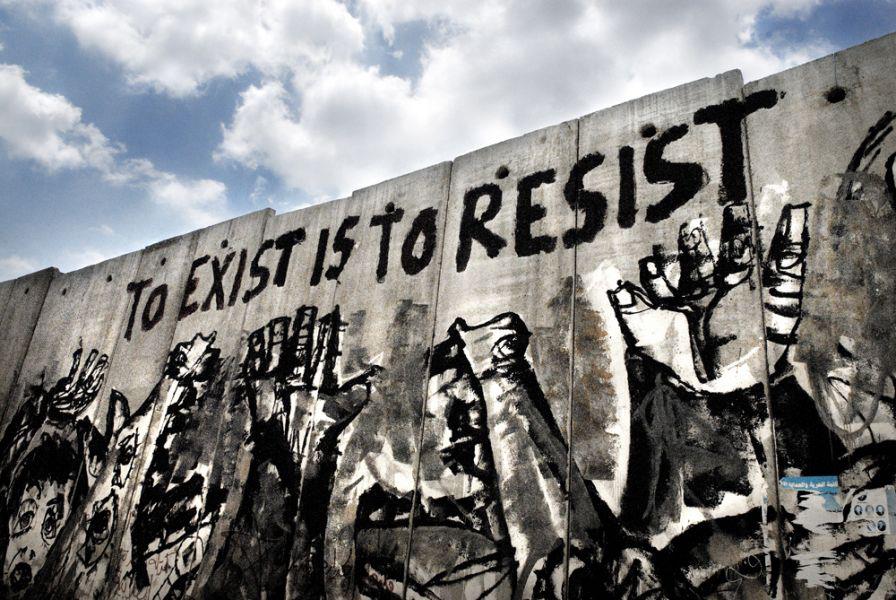
Recognizing Everyday Colonial Patterns
Colonial assumptions often appear in ordinary conversations rather than formal academic discussions.
Examples may include:
- Assuming Western experiences are universally applicable.
- Treating Indigenous knowledge as folklore instead of legitimate expertise.
- Viewing multilingualism as less valuable than dominant global languages.
- Assuming technological advancement automatically reflects cultural superiority.
- Romanticizing colonial history while ignoring its human consequences.
Recognizing these patterns does not require assigning blame to individuals.
Instead, it encourages greater awareness of how historical ideas continue to influence everyday thinking.
Language Diversity as Cultural Strength
For many years, colonial education systems discouraged Indigenous languages in favor of imperial languages.
In numerous countries, children were punished for speaking their native languages in schools.
Today, language revitalization has become an important aspect of cultural preservation.
Communities around the world are investing in:
- Bilingual education
- Language documentation
- Community schools
- Digital dictionaries
- Cultural storytelling projects
Language carries traditional knowledge, ecological understanding, oral history, and cultural identity.
Protecting linguistic diversity therefore contributes to preserving humanity’s broader intellectual heritage.
Building More Inclusive Narratives
Changing historical narratives does not mean replacing one dominant story with another.
Instead, it means expanding the range of voices included in public conversation.
Inclusive narratives recognize that history involves multiple participants whose experiences often differ dramatically.
Governments, educational institutions, publishers, museums, journalists, and filmmakers increasingly collaborate with local communities to produce materials reflecting greater historical complexity.
Such efforts strengthen rather than weaken public understanding by presenting richer and more balanced accounts of the past.
Practical Steps Individuals Can Take
Decolonizing thinking begins with everyday choices.
Individuals can:
- Read books written by authors from different cultural backgrounds.
- Explore multiple historical sources.
- Learn about Indigenous histories in their own region.
- Question familiar stereotypes.
- Support diverse media voices.
- Visit museums that acknowledge complex historical contexts.
- Reflect on language that unintentionally reinforces outdated assumptions.
- Engage respectfully with perspectives different from their own.
Small changes in curiosity and awareness can gradually reshape broader cultural conversations.
Why Decolonizing Thinking Matters
Some people question whether examining colonial legacies remains relevant today.
The answer lies in recognizing that ideas influence policies, institutions, and social relationships.
Assumptions about which cultures produce knowledge, whose history deserves attention, or whose perspectives are considered authoritative continue to affect education, diplomacy, development, and international cooperation.
A more inclusive understanding of history encourages:
- Greater cultural respect
- Better cross-cultural communication
- Stronger democratic dialogue
- Improved historical accuracy
- More equitable educational systems
Rather than dividing societies, these goals seek to deepen mutual understanding.
Conclusion
Decolonizing our minds is not about erasing history or rejecting the achievements of any civilization. It is about recognizing that historical narratives have often been shaped by unequal power relationships and that these narratives continue to influence language, education, media, and popular culture today. By questioning inherited assumptions, listening to diverse perspectives, and embracing more inclusive approaches to history, individuals can develop a richer understanding of the world and its many cultures.
The process begins with awareness. Every textbook, documentary, museum exhibition, newspaper article, and everyday conversation offers an opportunity to consider whose voices are being heard and whose experiences may have been overlooked. As societies become increasingly interconnected, cultivating this critical awareness is essential for building mutual respect and informed global citizenship.
Ultimately, decolonizing thinking is less about rewriting the past than about broadening our understanding of it. By acknowledging complexity, challenging stereotypes, and valuing multiple perspectives, we move toward a future in which history is not owned by a single narrative but shared through the diverse experiences of all humanity.