
Land is far more than a physical resource. For Indigenous peoples around the world, it represents identity, history, spirituality, cultural continuity, and the foundation of community life. Rivers, forests, mountains, and plains are often understood not merely as property but as living landscapes connected to ancestors, traditions, and future generations. Yet throughout the colonial era, millions of Indigenous people were displaced from their ancestral territories through conquest, forced treaties, land seizures, and government policies designed to expand settlement and resource extraction.
Although colonial empires largely disappeared during the twentieth century, the consequences of land dispossession continue to affect Indigenous communities today. Many remain separated from territories that sustained their cultures for centuries, while governments, corporations, and private landowners control areas once managed through traditional systems of stewardship.
In response, a growing international movement has emerged advocating for the recognition and restoration of Indigenous land rights. Often associated with the “Land Back” movement, these efforts seek not only to address historical injustice but also to strengthen biodiversity conservation, climate resilience, and sustainable resource management. Increasing scientific evidence suggests that restoring Indigenous stewardship over ancestral territories benefits both local communities and the global environment.
By 2026, land restitution has become an important topic in international law, environmental policy, and human rights. Around the world, legal reforms, court decisions, negotiated agreements, and conservation partnerships demonstrate that returning land can contribute to ecological balance while supporting reconciliation between Indigenous peoples and modern states.
Why Land Holds a Different Meaning
In many legal systems, land is viewed primarily as property that can be bought, sold, leased, or developed.
Many Indigenous cultures approach land differently.
Rather than treating nature as a commodity, traditional worldviews often emphasize relationships of responsibility between people and the environment.
Land may represent:
- Cultural identity
- Spiritual heritage
- Community memory
- Traditional knowledge
- Food security
- Sacred places
- Language preservation
- Ancestral responsibility
Because cultural traditions are closely connected to specific landscapes, losing access to ancestral territories often threatens the survival of Indigenous languages, ceremonies, ecological knowledge, and community structures.
The Historical Roots of Land Dispossession
During centuries of colonial expansion, Indigenous peoples experienced widespread displacement.
Colonial governments frequently declared Indigenous territories to be:
- Crown lands
- State property
- Public lands
- Empty territories
- Settlement frontiers
Many communities were relocated through:
- Forced removal
- Unequal treaties
- Military conquest
- Assimilation policies
- Agricultural expansion
- Mining development
- Infrastructure projects
These actions disrupted traditional governance systems while fundamentally changing relationships between Indigenous peoples and their environments.
Although many countries later recognized Indigenous rights, restoring territorial ownership has proven to be a long and complex process.
What Is the Land Back Movement?
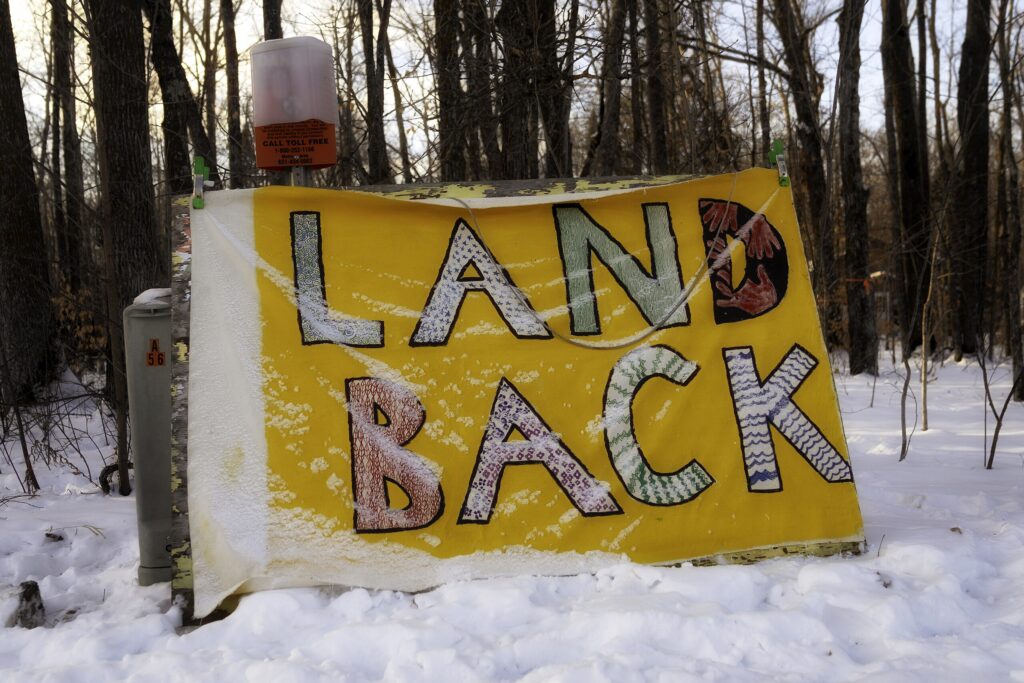
The Land Back movement has become one of the most influential Indigenous rights initiatives of recent years.
Its central idea is straightforward:
Indigenous peoples should regain meaningful authority over their ancestral territories.
Importantly, Land Back is not solely about transferring legal ownership.
The movement also emphasizes:
- Self-determination
- Cultural revitalization
- Environmental stewardship
- Community governance
- Protection of sacred sites
- Traditional ecological knowledge
Supporters argue that returning decision-making authority enables Indigenous communities to restore sustainable land management practices developed over generations.
Land Rights as Human Rights
International recognition of Indigenous land rights has expanded significantly over recent decades.
Modern legal principles increasingly acknowledge that Indigenous communities possess collective rights connected to traditionally occupied territories.
These rights often include:
- Cultural preservation
- Participation in land-use decisions
- Protection of sacred places
- Access to traditional resources
- Community governance
- Consultation regarding development projects
Many governments now recognize that respecting land rights contributes not only to social justice but also to democratic governance and long-term environmental sustainability.
Legal Pathways to Land Restitution
Countries have adopted different approaches to recognizing Indigenous territorial rights.
Common legal mechanisms include:
- Court decisions.
- Treaty settlements.
- Constitutional reforms.
- Government negotiations.
- Protected area agreements.
- Community land titles.
- Co-management arrangements.
Rather than relying on a single legal model, many successful initiatives combine historical research, community consultation, environmental planning, and negotiated compromise.
These processes often require balancing Indigenous rights with existing legal systems and competing land uses.
Indigenous Stewardship and Conservation
One of the strongest arguments supporting land restitution comes from environmental science.
Research consistently demonstrates that Indigenous-managed territories frequently maintain healthier ecosystems than surrounding areas.
These lands often experience:
- Lower deforestation rates.
- Higher biodiversity.
- Better soil conservation.
- Healthier freshwater systems.
- Greater wildlife protection.
- More sustainable resource use.
Long-term stewardship practices emphasize maintaining ecological balance rather than maximizing short-term economic extraction.
Consequently, many conservation organizations increasingly recognize Indigenous leadership as essential for protecting globally important ecosystems.
Climate Change and Land Rights
The relationship between Indigenous land rights and climate policy has become increasingly important.
Healthy forests, wetlands, grasslands, and peatlands managed by Indigenous communities store enormous quantities of carbon.
Protecting these ecosystems contributes directly to reducing greenhouse gas emissions.
At the same time, Indigenous communities often face significant environmental threats from:
- Illegal logging.
- Mining expansion.
- Oil and gas extraction.
- Agricultural conversion.
- Infrastructure development.
Securing Indigenous land rights therefore supports both human rights and international climate objectives.
Land protection has become an important strategy for climate resilience.
Co-Management: A Growing Partnership Model
Not every restitution process involves complete transfer of ownership.
Many countries have developed co-management systems in which governments and Indigenous communities jointly oversee protected areas.
Responsibilities may include:
- Wildlife conservation.
- Tourism management.
- Fire prevention.
- Cultural preservation.
- Scientific research.
- Visitor education.
Co-management combines governmental resources with Indigenous ecological knowledge, often producing stronger environmental outcomes than centralized management alone.
This collaborative approach has gained increasing international recognition.
Restoring Traditional Ecological Knowledge
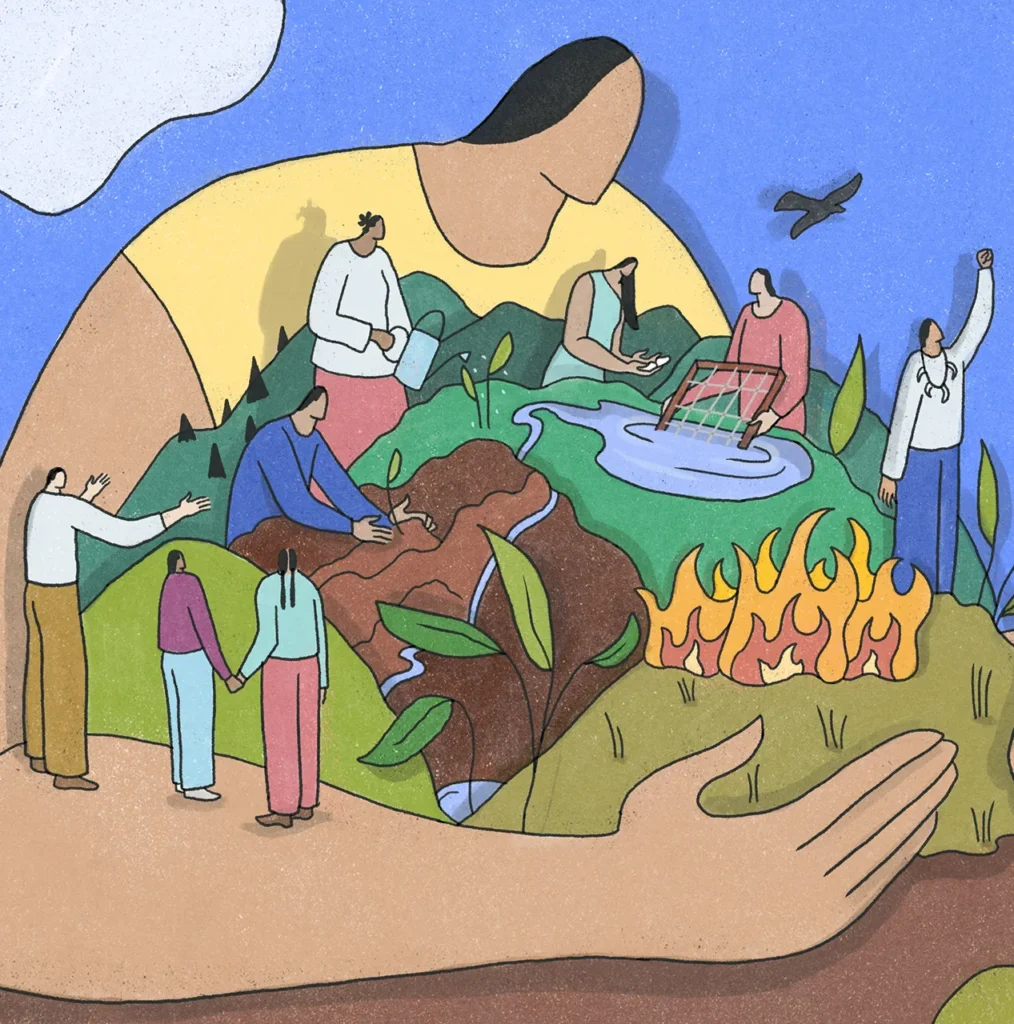
Returning land frequently allows Indigenous communities to restore traditional ecological practices that were interrupted during periods of displacement.
These practices may include:
- Cultural burning.
- Sustainable harvesting.
- Seasonal resource management.
- Wildlife monitoring.
- Water conservation.
- Habitat restoration.
Scientists increasingly collaborate with Indigenous knowledge holders to integrate traditional environmental practices into contemporary conservation planning.
Rather than replacing scientific research, traditional knowledge expands understanding of local ecosystems through centuries of accumulated observation.
Economic Opportunities Through Land Restoration
Land restitution can also support sustainable economic development.
Communities increasingly develop locally managed initiatives such as:
- Ecotourism.
- Sustainable forestry.
- Traditional agriculture.
- Cultural education programs.
- Renewable energy partnerships.
- Conservation employment.
These activities generate income while maintaining ecological integrity.
Unlike many extractive industries, community-led development often emphasizes long-term sustainability over rapid resource exploitation.
This creates opportunities for economic resilience alongside environmental protection.
Challenges and Ongoing Debates
Despite growing international support, land restitution remains complex.
Common challenges include:
- Competing ownership claims.
- Historical documentation.
- Existing private property rights.
- Infrastructure development.
- Resource extraction interests.
- Political disagreements.
- Administrative complexity.
Some critics worry that large-scale land transfers may create legal uncertainty or economic disruption.
Supporters respond that negotiated agreements, community consultation, and gradual implementation can address many of these concerns while advancing reconciliation.
Constructive dialogue remains essential.
Indigenous Leadership in Environmental Governance
Environmental governance increasingly recognizes Indigenous peoples as partners rather than stakeholders alone.
Their participation strengthens decision-making through:
- Local ecological expertise.
- Community monitoring.
- Long-term environmental planning.
- Cultural knowledge.
- Sustainable resource management.
International conservation organizations increasingly recommend including Indigenous communities from the earliest stages of environmental planning rather than consulting them only after major decisions have already been made.
Meaningful participation improves both social legitimacy and conservation effectiveness.
Lessons From Around the World
Experiences differ across countries, yet several common lessons have emerged.
Successful land restitution initiatives generally include:
- Respect for Indigenous self-determination.
- Transparent legal processes.
- Community participation.
- Long-term environmental planning.
- Recognition of traditional knowledge.
- Shared governance where appropriate.
- Ongoing dialogue among all parties.
These principles support reconciliation while strengthening environmental stewardship.
Rather than viewing land rights and conservation as competing objectives, many modern policies increasingly recognize them as mutually reinforcing.
A Future Built on Partnership
As biodiversity declines and climate change accelerates, protecting natural ecosystems has become a global priority.
Governments alone cannot achieve these objectives.
Indigenous communities already possess generations of experience managing some of the world’s most ecologically valuable landscapes.
Supporting Indigenous land rights creates opportunities to combine:
- Scientific innovation.
- Traditional ecological knowledge.
- Community leadership.
- Sustainable economic development.
- Climate adaptation.
- Biodiversity conservation.
Such partnerships offer one of the most promising paths toward long-term environmental resilience.
Conclusion
The movement to restore Indigenous land rights represents far more than an effort to correct historical injustice. It reflects a growing understanding that ecological sustainability, cultural preservation, and social justice are deeply interconnected. Around the world, legal reforms, negotiated settlements, and community-led conservation initiatives demonstrate that returning ancestral territories can strengthen biodiversity protection, improve climate resilience, and support more inclusive systems of environmental governance.
The Land Back movement has broadened public discussion beyond questions of ownership alone. It emphasizes stewardship, responsibility, and the restoration of relationships between people and the landscapes that have sustained them for generations. As scientific research increasingly confirms the environmental benefits of Indigenous land management, governments and conservation organizations are recognizing Indigenous communities as essential partners in addressing global ecological challenges.
Ultimately, restoring Indigenous rights to ancestral lands is not simply about the past—it is an investment in the future. By combining legal recognition, environmental cooperation, and respect for traditional knowledge, societies can build more resilient ecosystems while advancing reconciliation and creating a more balanced relationship between humanity and the natural world.